
The Ship
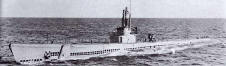
The USS Torsk (SS-423) was a Tench-class submarine commissioned on December 16, 1944. She made two war patrols in the Pacific and earned two battle stars for World War II service. She is best known for the events of August 14, 1945 — the final day of combat in the Pacific War.
On that day, Torsk sank two Japanese coastal defense vessels — the last enemy warships sunk by any submarine in World War II. Hours later, Japan announced its surrender. The war was over.
Today the Torsk rests at the Inner Harbor in Baltimore, Maryland, where she has served as a museum ship since 1972. She was designated a National Historic Landmark in 1986. You can walk her decks, duck through her hatches, and stand in the same compartments where her crew lived and served.
I have done more than walk her decks. I have slept aboard her. The connection goes back further than my own life.
The Last Patrol
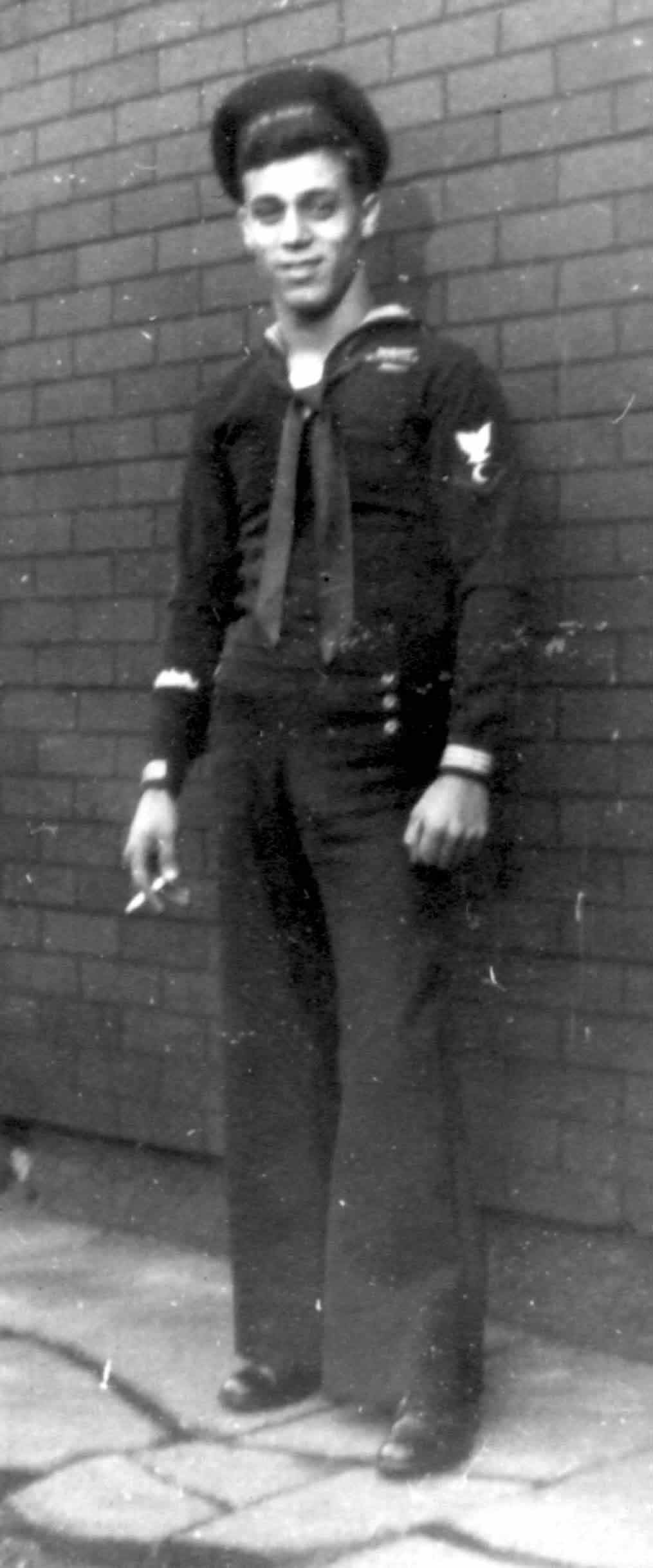
U.S. Navy · 1943–1953
My father, Joseph Dominick Boscarelli, was aboard the Torsk on that last patrol. He was the ship's cook — the man who fed the crew through years of war patrols across the Pacific.
He served in the United States Navy from January 12, 1943 to May 4, 1953 — ten years, two wars. He was stationed at Pearl Harbor Submarine Base and saw combat across the Pacific Theater: the China Sea, the Sea of Japan, Midway, the Marshall Islands, Okinawa, and Iwo Jima, among others.
The Torsk was not his only submarine. He enlisted in January 1943, nine days after he turned seventeen and entered the submarine service. His service record documents that he served aboard the USS Apogon (SS-308) and participated in her Third War Patrol, April 2 to May 22, 1944. He then served aboard the USS Picuda (SS-382) before reporting to the USS Torsk (SS-423) in 1945. After the war he served on the USS Sennet (SS-408) through the early Korean era, then reenlisted in April 1951 aboard the USS Halfbeak (SS-352), assigned to Submarine Development Group Two. Each boat a different crew, a different patrol, a different corner of the Pacific.
He wrote those words himself, in his own handwriting, on his military service record. Not for publication. Not for posterity. Just the plain facts, the way a Navy man records them. His last patrol. The last warships sunk in the war. And then it was over.
He came home.
The Record
What follows is drawn from my father's military service record — documents handwritten in Navy ink, now more than seventy years old. I have the originals.
Submarines served on during his career, in order:
The service record notes, in the hand of USS Apogon's commanding officer: "Participated in Third War Patrol of USS Apogon from 2 April 1944 to 22 May 1944." A minor entry in the paperwork. Fifty days in the Pacific, 1944.
Decorations and awards:
A Personal Connection
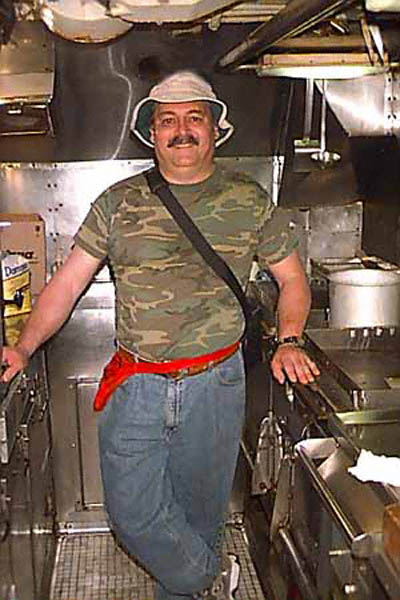
Aboard USS Torsk
I was born in New London, Connecticut — a submarine town, home to the Navy's submarine base. My father was stationed there. In a very real sense, the submarine service is woven into the beginning of my life.
When I was around five years old, my father took me aboard the Torsk. I don't remember all of it the way an adult would. But I remember the steel. The smell of oil and machinery. The cramped passageways and the weight of the hatches. Even as a small child, you felt the seriousness of what you were standing in.
My father was not a man who talked much about the war. Most of them weren't. What he knew, he wrote down on that service record card — plain, factual, undramatic. On my last patrol, we sank the last 2 Men-of-War. That was enough. The rest you could figure out.
As an adult, I returned to the Torsk in Baltimore and spent a night aboard. She is a museum ship now, open to visitors — but at night, with the harbor quiet and the lights of the city on the water, she is still a submarine. You lie in a bunk in the same space where men slept on war patrol, and you think about what that was.
I built this site because the Torsk deserves to be remembered. And because my father was there.
Coming aboard — Thursday evening, 10 May 2001


The small hours — Friday, 11 May 2001


Dawn on deck — Friday morning


The other ships at the Inner Harbor


Fort McHenry


Baltimore


Three Generations
Military service runs through my family in a way that spans more than a century.
My great-great-grandfather served in the Union Army during the Civil War — the Siege of Vicksburg, Sherman's March to the Sea. He was wounded and discharged.
My father served ten years in the United States Navy across World War II and Korea, on submarines in the Pacific. He was aboard the Torsk on the last day of combat in the war.
He told me a story once, from somewhere in the Caribbean during the war. They were running submerged off the coast of Haiti at night. When they surfaced, they could see fires on the shore — distant orange light — and hear the drums. Voodoo ceremonies, carried across the water in the dark.
They surfaced and put Marines over the side in rubber inflatables. He watched them disappear toward that shore, toward the firelight and the drums and whatever was waiting for them. Then he went back below, to his warm, dry bunk.
He said he never forgot the difference between what he had and what those men were going into. Sleeping in the mud, in danger, in the dark — while he slept warm and dry.
I never forgot it either. It was part of why I enlisted in the Marines when my time came. To prove something to myself. To meet the standard those men in the inflatables had set. To earn the right to tell the story.
I served in the United States Marine Corps — MOS 6212, Aviation Electronics, attached to MAG-31, 2nd MAW at MCAS Beaufort, South Carolina. I worked F-4 Phantoms and A-4 Skyhawks. I was discharged in April 1970, honorably, as a Corporal.
MCAS Beaufort sits in the low country of South Carolina — the same ground Sherman's army crossed a hundred years before. I have always thought there was something to that. My great-great-grandfather walked through that country with a rifle. I walked through it with an avionics toolkit. Almost exactly one hundred years apart, almost exactly the same ground.
Three generations. Three branches. Three wars. One family.